Guide Fuerteventura
What to see in the south of Fuerteventura
Sotavento, Cofete, Jandía and Ajuy: how to reach each place, where not to swim, and a three-day plan.
Contents
- Before you go
- 1. Sotavento beaches
- 2. Costa Calma
- 3. Jandía beaches: Esquinzo, Butihondo and Mal Nombre
- 4. Morro Jable and Playa del Matorral
- 5. Punta de Jandía and Puertito de la Cruz
- 6. Cofete and Villa Winter
- 7. La Pared
- 8. Ajuy and its caves
- 9. Pájara
- Travelling with children: Oasis Wildlife
- If you have more time
- How to plan 3 days
Southern Fuerteventura is mostly the Jandía peninsula: a mountainous arm of land, with kilometres of pale sand on one side (sotavento) and the wild Atlantic on the other (barlovento). Add the La Pared isthmus and inland Pájara, where the oldest rocks in the Canaries come to the surface. This is what is actually worth the trip, and how to fit it in.
- Where to stay
- Costa Calma or Morro Jable
- From the airport
- ≈ 1 h to Costa Calma, ≈ 1 h 15 min to Morro Jable
- How long
- 3 or 4 days
- Essential
- A car (and patience on dirt tracks)
Before you go
- The wind rules. The trade winds blow almost all year, and hard in summer. Great for windsurfing, a nuisance for parasols: a beach windbreak is worth packing.
- Leeward and windward. The beaches on Jandía’s south side are calm; those on the north side (Cofete, La Pared) have dangerous currents. Better not to swim there.
- Dirt tracks. Cofete and Punta de Jandía are reached by unpaved tracks. Check what your hire car insurance covers before heading off.
- Sun and water. There is very little natural shade. Bring water, a hat and sunscreen even when the wind makes it feel cool.
- Nudism. It’s common and perfectly normal on many Jandía beaches, especially away from the resorts.
1. Sotavento beaches
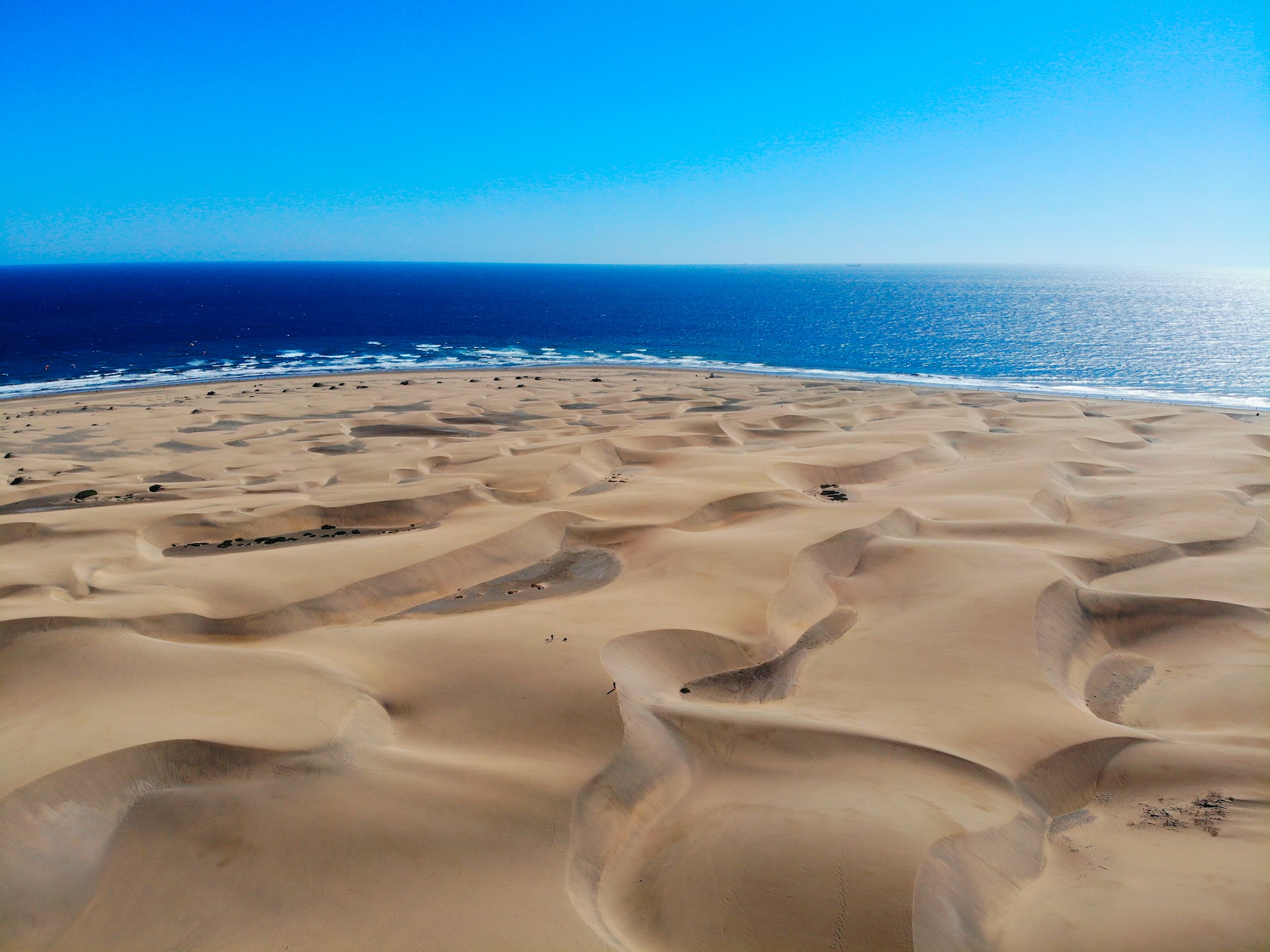
Miles of white sand between Costa Calma and Risco del Paso, with a twist: at high tide the sea flows in behind a sandbar and forms a shallow, turquoise lagoon. It’s the island’s most photographed landscape and one of Europe’s best windsurfing and kitesurfing spots: the Fuerteventura Windsurfing World Cup has been held here every summer since 1986.
- Best for
- Walking, lagoon swims, wind sports
- Best time
- High tide, ideally spring tides
- Access
- Signposted turn-offs from the FV-2
2. Costa Calma
The first big resort as you enter Jandía. It has sheltered coves, supermarkets, equipment hire and a very handy location: Sotavento is next door, Morro Jable half an hour away and La Pared ten minutes. If you’re staying in just one place in the south, this is a strong candidate.
3. Jandía beaches: Esquinzo, Butihondo and Mal Nombre
Between Costa Calma and Morro Jable, the FV-2 runs past a string of long, pale beaches separated by low cliffs. Some have hotels nearby; others, like Mal Nombre, stay almost empty even in high season. To find them, look for the dirt turn-offs towards the sea and park without driving onto the vegetation.
4. Morro Jable and Playa del Matorral
Morro Jable keeps its fishing harbour and an old quarter with fish restaurants; ferries to Gran Canaria also leave from here. In front of the town stretches Playa del Matorral, more than 4 kilometres of fine sand with a promenade. Behind it lies the Saladar de Jandía, a protected salt marsh with salt-tolerant plants that you cross on wooden boardwalks. The Morro Jable lighthouse marks the traditional boundary: north of it is the naturist area; south, towards town, the regular beach.
5. Punta de Jandía and Puertito de la Cruz
At the end of the peninsula, about 20 kilometres of dirt track from Morro Jable, stands the Punta de Jandía lighthouse, the island’s southwestern tip. Close by, Puertito de la Cruz is a fishing hamlet where you can eat fresh fish looking out to sea. The empty, desert landscape along the way makes the trip worthwhile on its own.
6. Cofete and Villa Winter
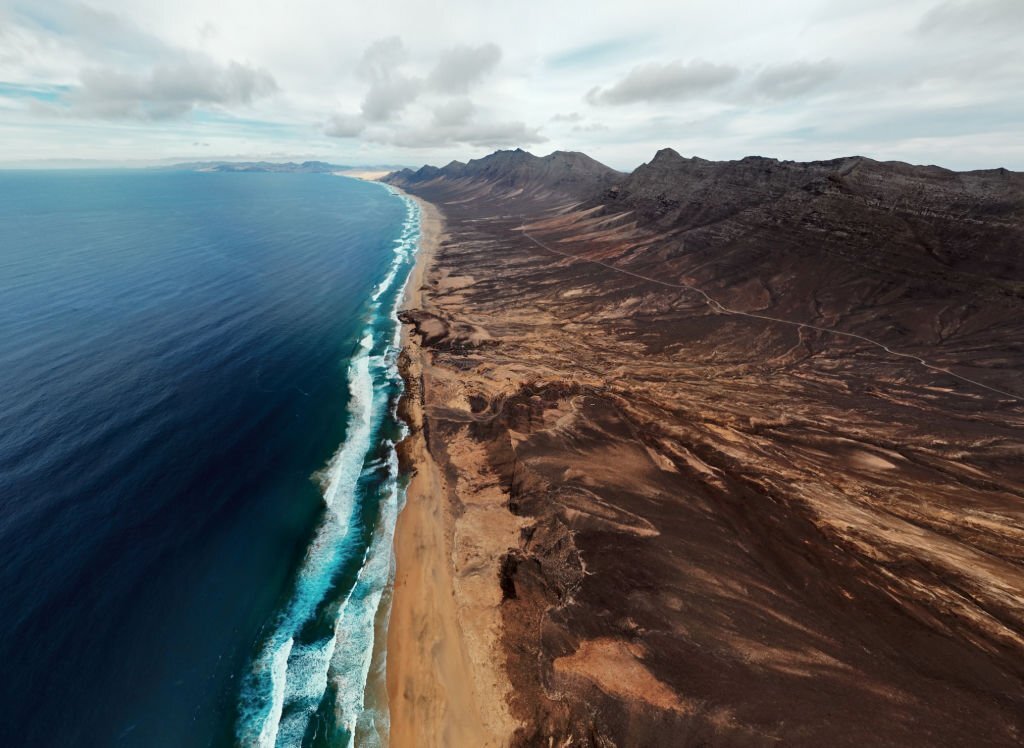
Fuerteventura’s most spectacular beach: more than 12 kilometres of untouched sand at the foot of the Jandía mountains, with no buildings in sight. Next to the car park, a small cemetery half-buried in sand remembers the valley’s former residents. On the hillside stands Villa Winter, the house built by German engineer Gustav Winter in the 1940s, surrounded by all kinds of legends (from secret bases to submarines) that nobody has ever proven.
- Distance
- ≈ 20 km from Morro Jable, much of it dirt track
- By car
- ≈ 50–60 min, an SUV or 4×4 is best
- By bus
- Line 111 from Morro Jable
- Swimming
- Not advised: very strong currents
7. La Pared
The isthmus joining Jandía to the rest of the island takes its name from a stone wall (pared) that, according to the chronicles, divided Fuerteventura’s two pre-Hispanic kingdoms, Maxorata and Jandía. Today it’s a small village with a surf school and a sand-and-rock beach pounded by waves. Not one for swimming, but one of the best places in the south to watch the sunset.
8. Ajuy and its caves
A fishing village with a black-sand beach on the west coast. Facing the sea, a path leaves from the right-hand end of the beach: a 15–20 minute walk past old lime kilns and the former Puerto de la Peña, where, by tradition, Jean de Béthencourt landed in 1402. It ends at steps leading down to the Ajuy caves, carved out by the sea. They are a Natural Monument because the oldest rocks in the Canary Islands are exposed here: ocean-floor sediments 100 to 150 million years old, far older than the island itself.
- Walk
- ≈ 1.5 km return, easy
- Bring
- Closed shoes: the rock is slippery near the cave
- Entry
- Free
9. Pájara
The capital of the island’s largest municipality is a quiet, leafy village. Its gem is the church of Nuestra Señora de Regla, from the 17th century, with a doorway carved with suns, snakes, birds and feathered heads. For decades it was said to show Aztec influence; today historians link it instead to European Baroque iconography. From Pájara, the FV-605 towards La Pared crosses an almost lunar landscape and passes the Sicasumbre viewpoint.
Travelling with children: Oasis Wildlife
It is not a landscape essential, but if you are travelling with children it is the most established family day out in the south: a zoo and botanical garden in La Lajita. It opens daily from 9:00 to 18:00 and runs free buses from the main resort areas, no booking needed; check stops and prices on the official website.
If you have more time
Aloe vera is almost a symbol of Fuerteventura, and several farms in the south show how it’s grown and sell their products; many can be visited for free. To the east, Gran Tarajal and Las Playitas are uncrowded seaside towns, and from Las Playitas a road climbs to the La Entallada lighthouse, perched on the cliff edge.
How to plan 3 days
-
Day 1: Sotavento and La Pared
Morning at Sotavento (time it with high tide), lunch in Costa Calma and sunset at La Pared.
-
Day 2: Cofete and Punta de Jandía
Leave early for Cofete, carry on to Puertito de la Cruz for lunch and return to Morro Jable for a late-afternoon walk along the Matorral.
-
Day 3: Pájara and Ajuy
Pájara’s church and the Ajuy caves in the morning. In the afternoon, Oasis Wildlife if you’re travelling with children, or continue to Betancuria, the old capital, in the centre of the island.
Take it with you
Things to do on the island
Experiences in Fuerteventura
Plans on the island, with duration and price up front.
See all 13 experiences in Fuerteventura